Illustration
Canyon Country / Santa Clarita / California
Kitchen Remodel Canyon Country, CA
One call. A licensed contractor. A written quote.
Say what the room needs and we put you in front of a contractor the state of California has licensed. They come out, they measure, and they hand you a contract naming the price and the scope. Reading it costs nothing, and so does walking away from it.
- California-licensed contractor
- Free, no obligation
- Quoted in writing
Kitchen jobs we help with in Canyon Country
From a counter swap to a full tear out. The contractor you are introduced to prices the room in front of them, and what they write down is what you would be agreeing to.
Canyon Country kitchens come in every shape. Some are original to the house and have never been touched. Some were updated once, a long time ago, and the cabinets are still sound while everything around them has aged out. Some need nothing but a counter and a sink. The point of one phone call is that you do not have to know which category you are in before you make it.
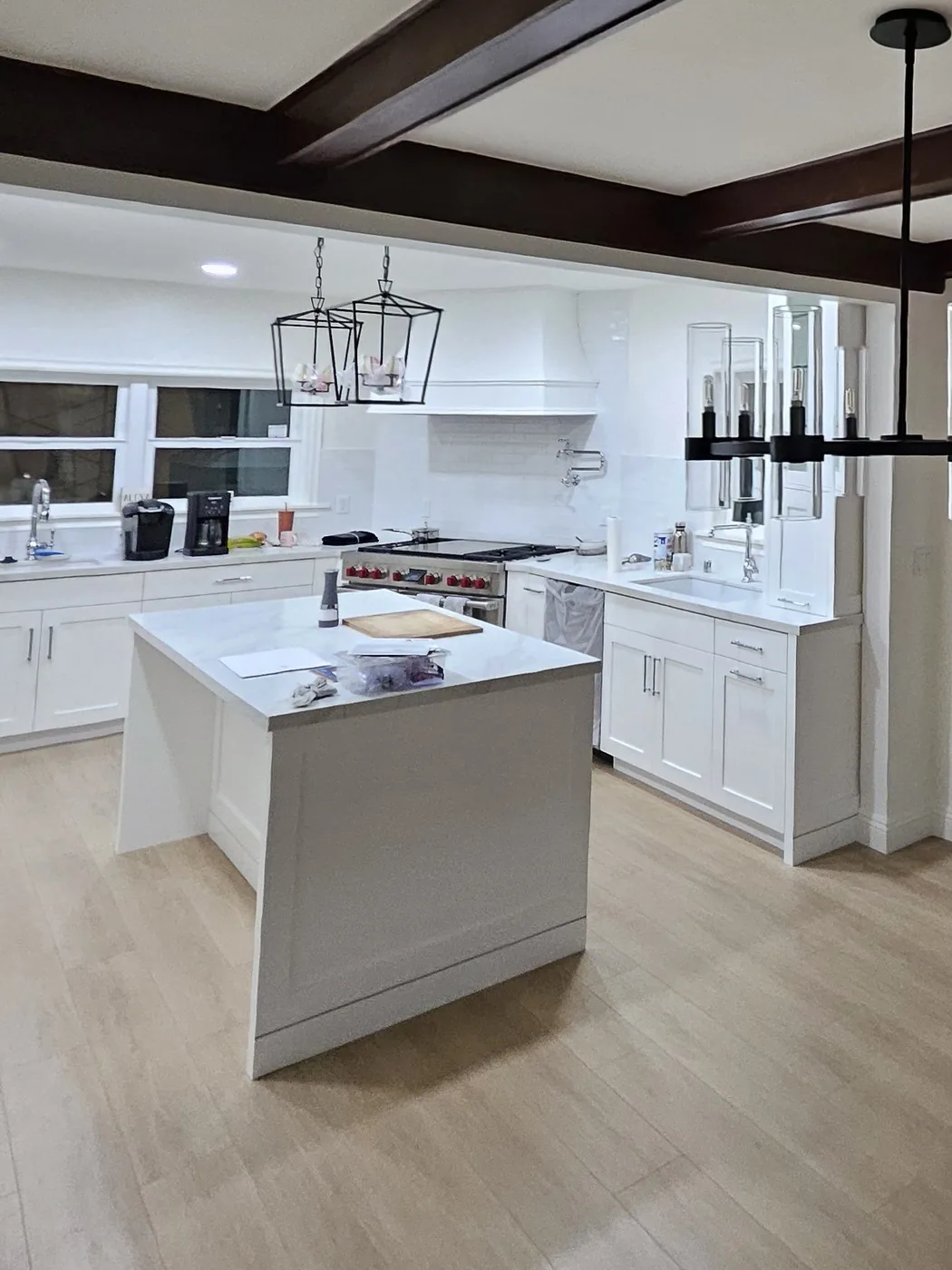
- The whole roomBoxes, counters, floor, lights and appliances in one go. That is enough separate trades that a residential remodeling contractor may sign for it, and every one of them belongs on the contract by name.
- Boxes, or only the frontsEither the cabinet carcasses come out, or they stay and the doors and drawer fronts change. Most of the gap in price sits in that one decision, so settle it before anybody signs.
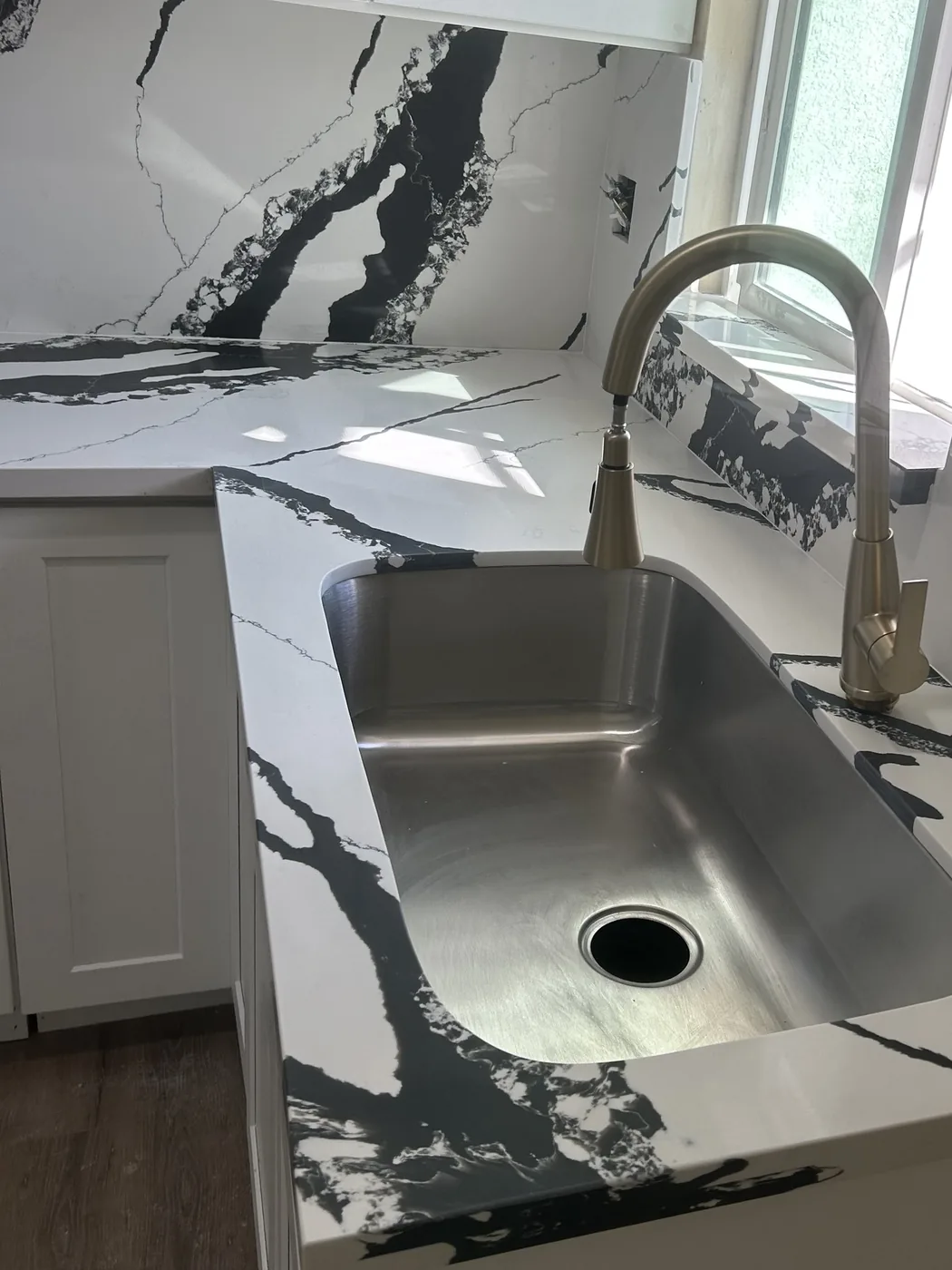
- Counters by themselvesStone or quartz, templated after the boxes sit level. A counters only job can come to a single trade, and a B-2 holder is not allowed to take a contract that narrow.
- Sink or range on the movePlumbing and wiring travel with them. More trades on the job means more lines on the contract and more people who have to be paid.
- Paint, hardware and a faucetSmall work passes five hundred dollars quicker than most people expect, and past that line the agreement has to be in writing.
- A job somebody walked offA half done kitchen needs a contractor willing to put their name to work they did not do. Get what they will and will not stand behind on the page.
Why one call beats calling around
Finding a kitchen contractor the usual way takes weeks. You call six numbers off a map, three never call back, two are booked into next season, and the one who does show up turns out to do bathrooms mostly. None of that tells you anything useful about your kitchen.
One conversation here replaces all of that. We ask about the room and the job, answer your questions about the paperwork, and then introduce you to the licensed contractor we work with. You get a visit and a written quote without working through a list of numbers.
- Check the license yourselfWe give you the number and the page to type it into. Nobody should be taking our word for who the state has licensed.
- Read it before you sign itCost, scope and whichever permits the job needs, written down and signed off before a cabinet comes out. Above five hundred dollars, the law requires it.
- Asking costs you nothingThe call is free and the visit is free. A quote you do not like is a quote you throw away.
- We are not the contractorWe do not build kitchens and we do not set prices. We answer the paperwork questions and make the introduction. What follows is between you and whoever signs.
Three numbers to know before you sign
California puts real limits on what a contractor can ask you for and when. They are short, they are specific, and almost nobody selling kitchen remodels in this valley mentions them. Reading these three before you sign is the cheapest protection available to you.
- $500Over this, it must be in writingA home improvement job whose total goes past five hundred dollars needs a written contract. The total is added up across every contract for the work, so splitting one job into pieces does not get around it.
- $1,000The ceiling on a depositOne thousand dollars or ten percent of the price, whichever is smaller. There is one exception that matters, and it is in the next paragraph.
- 3 daysBusiness days to cancelCounted from the day you receive a signed copy that carries the cancellation notice. Five business days if you are a senior citizen.


The four conditions nobody puts on their website
- The deposit cap has an exception
- A contractor carrying an approved performance and payment bond, a bond equivalent, or a joint control approved by the registrar is released from the cap and from the progress payment rules, and may lawfully take money ahead of the work. So a request for more than a thousand up front is not automatically wrong. Ask which of those they carry.
- Payment cannot run ahead of the work
- Apart from the deposit, a contractor may not request or accept payment beyond the value of the work actually performed or the material actually delivered.
- You can demand lien releases
- After any payment, if you ask, they must obtain and hand you an unconditional lien release covering the portion you paid for. You may withhold every further payment until those releases arrive.
- Canceling does not always apply
- The right does not attach if the contract was negotiated at the contractor's own place of business. Where it does, cancel in writing by midnight of the third business day and anything you paid comes back within ten days.
This exact notice has to be in your contract
Not a summary of it. This wording, at least 12 point boldface, sitting next to a space reserved for your signature, which you sign and date to acknowledge you received it. If it is missing, you can file a complaint with the state board.
Three-Day Right to Cancel
You, the buyer, have the right to cancel this contract within three business days. You may cancel by emailing, mailing, faxing, or delivering a written notice to the contractor at the contractor's place of business by midnight of the third business day after you received a signed and dated copy of the contract that includes this notice. Include your name, your address, and the date you received the signed copy of the contract and this notice.
If you cancel, the contractor must return to you anything you paid within 10 days of receiving the notice of cancellation. For your part, you must make available to the contractor at your residence, in substantially as good condition as you received them, goods delivered to you under this contract or sale.
For a senior citizen every "three" and "third" above becomes "five" and "fifth". We walk through all of this on the phone, in plain words, before anybody visits. The detail lives on what a kitchen contract has to contain, deposits and progress payments and how the right to cancel works.
Source Business and Professions Code 7159 / Business and Professions Code 7159.5
What actually moves the price
The question everybody opens with is whether some number is enough. Ten thousand, thirty thousand, sixty. It is the wrong question in the sense that no honest answer exists without seeing the room, but it is the right instinct, because the amount does decide what is on the table.
What we can tell you before anybody visits is which decisions move the number and which barely touch it. There are four that matter, and they are close to independent of each other.
- Does anything move
- Leaving the sink, the range and the walls where they are keeps the job inside cabinetry, counters and finishes. Moving any of them pulls in plumbing, electrical or framing, and each of those is its own trade, its own schedule and its own inspection.
- Cabinets, replaced or refaced
- New boxes reset the layout and usually the single largest line on the quote. Refacing keeps the boxes and changes the doors, drawer fronts and hardware. If the existing boxes are square and solid, refacing can be a fraction of the cost and look almost identical from two feet away.
- Counter material
- The spread between the cheapest and the dearest surface on the same run of cabinets is large, and it is the one decision you can change late without disturbing anything else on the schedule.
- How much is hidden
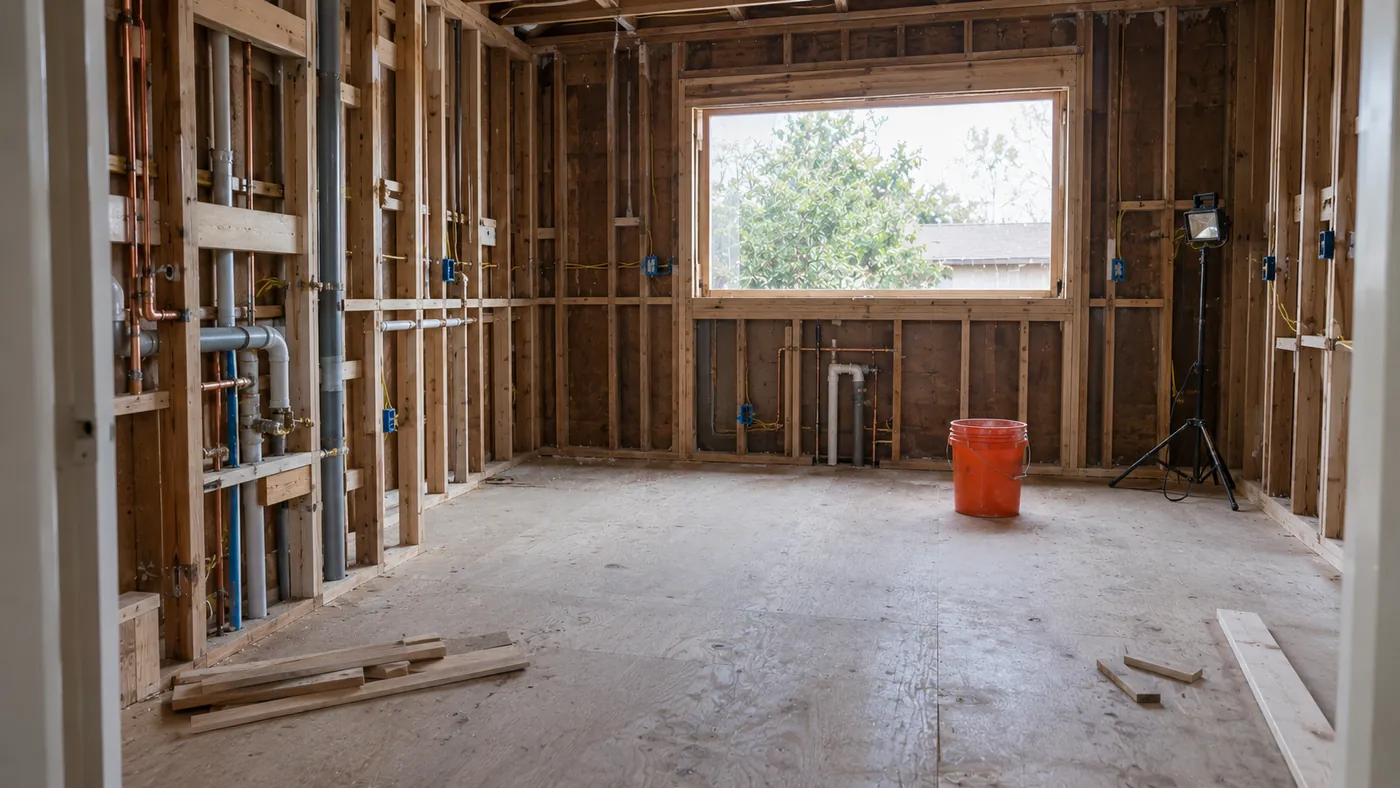
- What sits behind the old cabinets is unknown until they come off. Older houses turn up surprises, and a quote that ignores the possibility is the less honest one.
A contractor who has seen the room can price all four. Nobody can price them over the phone, and you should treat a firm number offered before a visit as a number that is going to change. There is more on this, including how to read the national cost surveys people quote at you, on what a kitchen costs here.
Who you are introduced to, and how to check them
The contractor we introduce you to is licensed by the Contractors State License Board. You do not have to take our word for that, and you should not. The state runs a free public lookup and it takes about a minute.
License classes matter more than most homeowners realize, because a class is a permission, not a title. Which one a contractor holds determines what they are allowed to sign for on your kitchen.
- B, General Building
- The broad residential class. Their principal business is structures that need at least two unrelated building trades. There are limits on taking a prime contract for work outside framing and carpentry unless the job requires two unrelated trades beyond those, or they hold the right specialty class, or they subcontract it to someone who does.
- B-2, Residential Remodeling
- Built for exactly this kind of work, improvements to an existing residential wood frame house. The catch is a floor, not a ceiling: a B-2 may not take a contract unless it includes three or more unrelated trades. A full kitchen clears that easily. A counters only job does not, and a B-2 cannot sign for it.
- C-6, Cabinet, Millwork and Finish Carpentry
- Makes and installs cabinets, cases, doors, trim and other finish carpentry. The right class for a cabinet led job.
- The trade classes
- C-36 Plumbing, C-10 Electrical, C-20 Warm-Air Heating, Ventilating and Air-Conditioning, C-54 Ceramic and Mosaic Tile, C-15 Flooring and Floor Covering, C-9 Drywall, C-33 Painting and Decorating. On a full kitchen several of these are in the room at different weeks.
The state lookup takes a license number, a business name or a person's name. A license number is digits only, never letters, and never more than eight of them. If a business name search comes back empty and the name contains a person, try the surname first, so that John Smith Construction is searched as Smith John Con. The database goes down Sundays at 8pm and comes back Monday at 6am, which catches people out on a weekend.
We will give you the license number of the contractor we introduce and tell you what to look at on the result. How to check a contractor's license covers the fields worth reading and what a bad result looks like.
What the middle of a kitchen job looks like
Every kitchen site shows finished rooms. Finished rooms are the easy part to photograph and the least useful thing to look at, because the finished room is the same in every advertisement you have ever seen.
This is the other part. Counters and backsplash are in, the hood is hung, the appliances are still shrink wrapped, the floor is not down yet and there is tape everywhere. Several weeks of a kitchen look like this, and knowing that in advance is most of what makes it bearable.
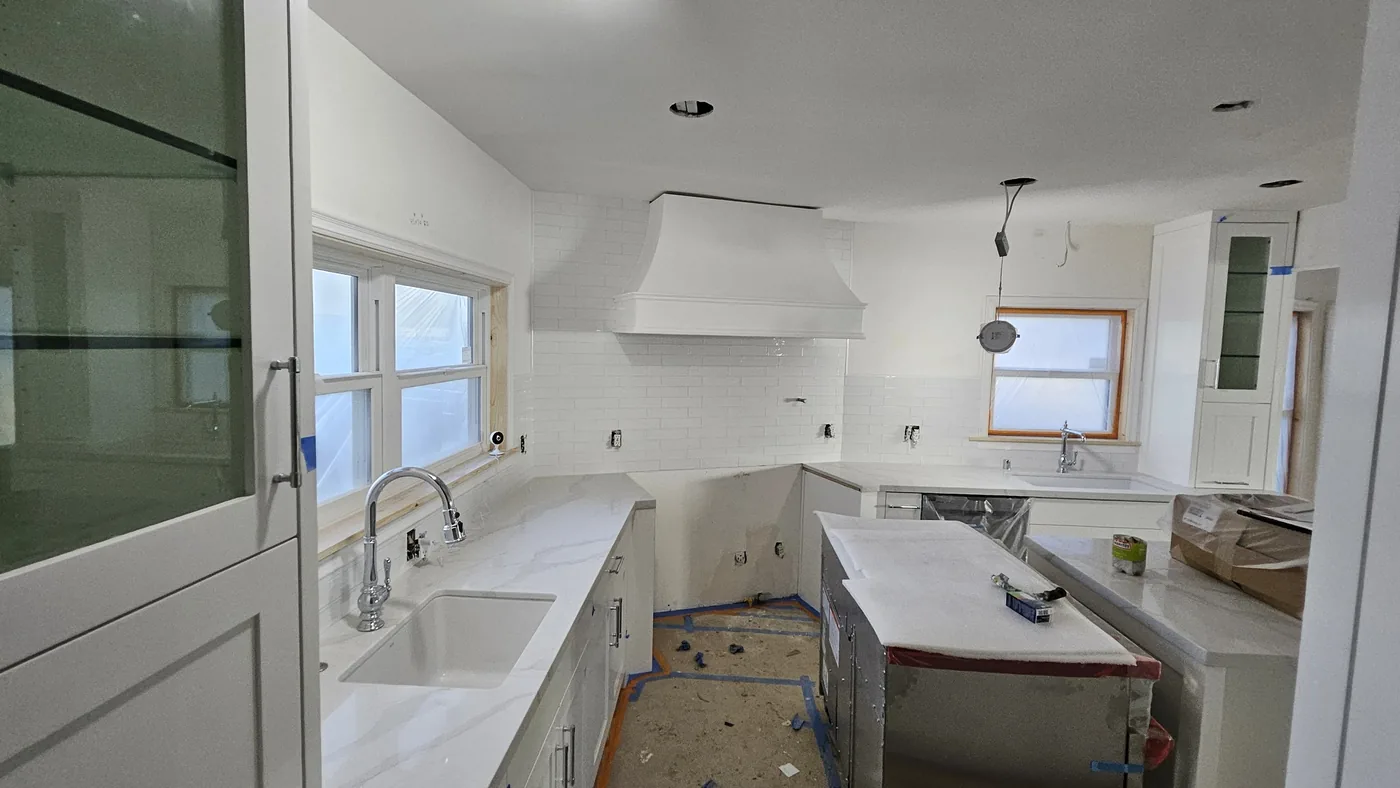
A good contractor tells you which weeks look like this, roughly how long the kitchen is out of service, and what you can still use while it is. Ask that on the first visit. The answer tells you a great deal about how many of these they have actually run.
Where this covers
Canyon Country, and the rest of Santa Clarita around it. If you are in Sand Canyon, off Soledad, up around Sierra Highway or anywhere else inside Canyon Country, you are in the area. We take calls for neighboring parts of the valley too, and if a job is outside what we can cover well we will say so on the call rather than waste your afternoon.
This is Canyon Country, California, in the Santa Clarita Valley, in Los Angeles County. Everything on this site is California law and California licensing.
Questions people ask first
- How much does a kitchen remodel cost in Canyon Country?
There is no honest number before somebody sees the room. What decides it is whether the sink or range moves, whether cabinets are replaced or refaced, which counter material you choose, and what turns up behind the old cabinets. A contractor who has stood in the kitchen can price all four. One who has not, cannot.
- Is $10,000 enough for a kitchen?
It can be, for a job that leaves the layout alone. Think counters, a sink and faucet, hardware, paint, possibly refacing rather than replacing cabinets. It is not a budget for moving plumbing or for new cabinet boxes throughout.
- Is $30,000 enough for a kitchen?
For a lot of Canyon Country kitchens, yes, provided the layout mostly stays put. Once the sink or the range moves, or the room opens into another room, the trades multiply and so does the number. The way to find out is a written quote against a written scope.
- Do I need a permit for a kitchen remodel?
It depends entirely on what is being done. Swapping like for like is treated differently from moving plumbing, altering electrical circuits or changing the structure. The contractor is the one who should tell you which permits your specific scope needs, and that answer belongs in the written quote.
- How much deposit can a contractor ask for?
One thousand dollars or ten percent of the contract price, whichever is less. The exception is a contractor carrying an approved bond or joint control, who is released from that cap and may take payment ahead of the work. Ask which applies before you write anything.
- Can I cancel after I sign?
Usually yes, within three business days, five if you are a senior citizen, counted from receiving a signed copy that carries the cancellation notice. It does not apply if you signed at the contractor's own place of business. Cancel in writing and anything you paid comes back within ten days.
- Are you the contractor?
No. This is a referral service. We explain the paperwork and hand you to somebody the state has licensed to do the work. We do not quote and we do not build.
- What does the call cost?
Nothing, and there is no obligation at any point. If you take the quote and decide against the whole idea, that is a normal outcome.
You get a straight answer on the phone, then an introduction to a licensed contractor who can quote it.